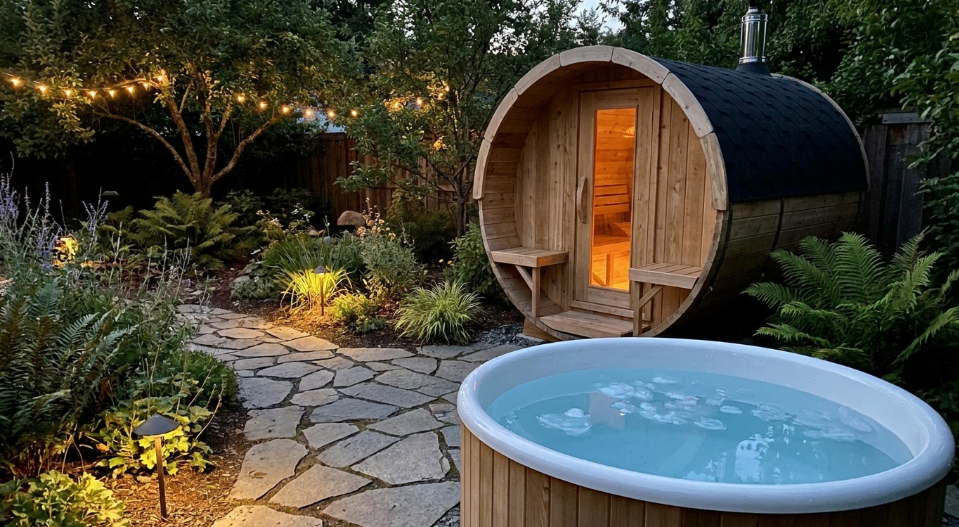
Contrast therapy, alternating hot sauna heat with cold plunge exposure, draws on two separate research bodies rather than one combined study: large Finnish cohort work links regular sauna bathing with lower cardiovascular and all-cause mortality risk, while cold water immersion research is more mixed, showing some recovery benefit for general soreness but a possible dampening effect on strength and muscle gains when used right after resistance training. Neither body of evidence proves the combination itself produces a bigger benefit than either exposure alone. The honest summary is that sauna’s associations are consistently favorable, cold immersion’s are situational, and pairing them is more about routine and preference than a documented multiplier effect.
What Contrast Therapy Actually Involves
In practice, contrast therapy usually means several short rounds, ten to twenty minutes of sauna heat followed by one to three minutes of cold plunge exposure, repeated two or three times in a session rather than one long stretch in either direction. Some people finish on hot, others on cold, and there is no single studied protocol that the research treats as the standard. Most of what gets called contrast therapy online is closer to a personal routine built from separate hot and cold research than a single tested combined intervention.
What the Sauna Side of the Evidence Shows
A widely cited 2015 study in JAMA Internal Medicine following middle-aged Finnish men found that more frequent sauna bathing was associated with lower risk of fatal cardiovascular events and all-cause mortality, with the strongest association among those bathing four to seven times a week. A related 2018 study in Annals of Medicine found that sauna bathing combined with higher cardiorespiratory fitness carried a joint association with lower mortality risk, suggesting the two habits may compound rather than substitute for each other. A separate 2018 study in Heart and Vessels reported measurable short-term changes in blood markers of cardiovascular function among regular sauna users following a session. All of this is association-level cohort evidence, not a randomized trial proving sauna bathing causes lower mortality, and it says nothing directly about what happens when a cold plunge follows the heat.
What the Cold Plunge Side of the Evidence Shows
Cold water immersion’s evidence base is more mixed than sauna’s. A 2025 systematic review and meta-analysis in PLoS One covering cold water immersion broadly found some support for improved mood and reduced perceived fatigue, without strong evidence for larger physiological changes. A 2023 meta-analysis in Frontiers in Physiology focused specifically on post-exercise cold water immersion and fatigue recovery found modest benefit for perceived recovery, while a 2012 Cochrane review on cold-water immersion for muscle soreness after exercise found limited, low-quality evidence overall. Separately, some trials outside this specific library have suggested regular cold water immersion right after resistance training may blunt long-term strength and muscle adaptations, which matters for anyone doing contrast therapy on a lifting day rather than a rest day.
Is There Research on Combining Both?
Not really, at least not at the scale of the sauna cohort studies. The Finnish sauna research that produced the strongest cardiovascular associations followed sauna bathing habits on their own, without a standardized cold exposure attached. Cold water immersion research, in turn, mostly studies cold exposure after exercise rather than after heat exposure specifically. Anyone doing contrast therapy is combining two separately studied practices based on the reasonable assumption that the individual benefits carry over, not because a trial has measured the combination directly against either exposure alone.
Who Should Be Cautious With Contrast Therapy
The sauna literature consistently flags unstable angina, a recent heart attack, uncontrolled high blood pressure, and pregnancy as reasons to be more careful with heat exposure, and the same caution extends to adding a cold plunge on top of it, since the cold exposure itself triggers a rapid spike in heart rate and blood pressure on entry. Alcohol before or during either exposure is also flagged repeatedly across the research as increasing risk. None of this means contrast therapy is unsafe for a generally healthy adult; it means the people who should think twice are largely the same people who should already be cautious with sauna heat alone.
A Practical Contrast Therapy Routine
Most people who build a contrast routine start with a sauna session most people already have or are considering, then add a cold plunge as the second piece rather than the first purchase. If you’re weighing that order, it helps to look at what a sauna-first setup actually costs to run alongside a chiller before adding the cold side; you can browse SweatDecks saunas next to chiller options to see how the two pieces fit together on one property rather than shopping them separately. Starting with shorter cold exposures, a minute or two, and working up gradually tends to be more sustainable than jumping straight to long cold rounds on day one.
Building Up Gradually: A Sample Progression
Someone new to both sauna and cold exposure is usually better off introducing them one at a time rather than starting a full contrast routine on day one. A reasonable first month might mean two or three sauna sessions a week on their own, ten to fifteen minutes each, before adding a cold plunge at all. Once the sauna side feels routine, adding a short cold exposure, thirty seconds to a minute at a milder temperature around 55 to 59 degrees, after one sauna session a week is a gentler entry point than jumping straight into multiple hot-cold rounds. From there, most people gradually extend cold exposure time and add more rounds per session over several weeks rather than months, adjusting based on how recovery and sleep respond rather than following a fixed schedule. There is no research-backed timeline for this progression specifically, so it comes down to paying attention to how the body responds and adjusting from there, the same way anyone builds up tolerance to a new form of exercise.
Frequently Asked Questions
What is contrast therapy?
Alternating between a hot exposure, usually a sauna, and a cold exposure, usually a cold plunge, typically in short repeated rounds.
Is there research specifically on sauna plus cold plunge together?
Most strong cohort research studies sauna bathing and cold water immersion separately, so the two bodies of evidence should be read as related but distinct.
Does cold plunging after a sauna cancel out the benefits?
No strong evidence supports that. The documented caution is that cold immersion right after resistance training may blunt strength and muscle gains, a separate issue from sauna use.
Who should be careful with contrast therapy?
People with unstable angina, a recent heart attack, uncontrolled high blood pressure, or pregnancy are commonly flagged as needing more caution with either extreme.
References
- Association between sauna bathing and fatal cardiovascular and all-cause mortality events (JAMA Internal Medicine, 2015)
- Joint associations of sauna bathing and cardiorespiratory fitness on cardiovascular and all-cause mortality risk: a long-term prospective cohort study (Annals of Medicine, 2018)
- Short-term effects of Finnish sauna bathing on blood-based markers of cardiovascular function in non-naive sauna users (Heart and Vessels, 2018)
- Effects of cold-water immersion on health and wellbeing: A systematic review and meta-analysis (PLoS One, 2025)
- Effects of cold water immersion after exercise on fatigue recovery and exercise performance: meta analysis (Frontiers in Physiology, 2023)