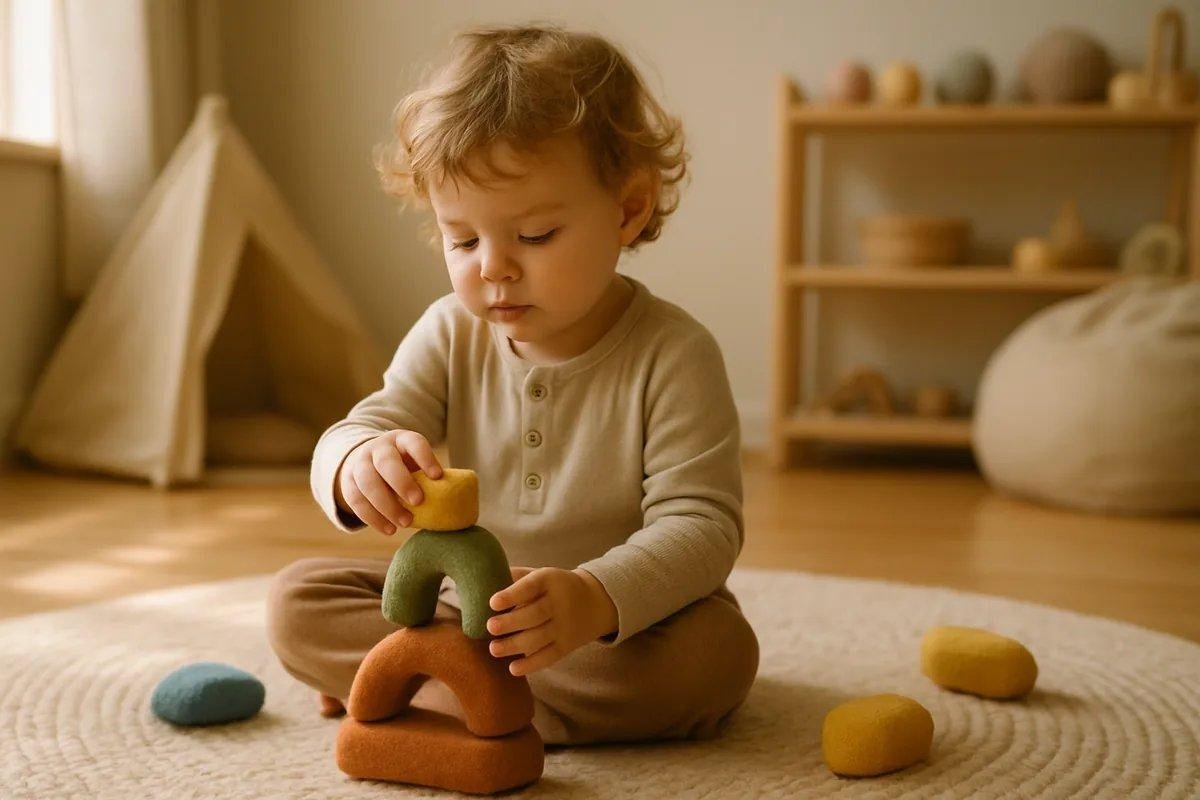
Quick answer: There is no single cause of nonverbal autism. It reflects a mix of genetic and developmental factors that shape how the brain handles speech and communication. Being nonverbal describes how a child communicates now, not a fixed outcome, and many children go on to communicate in other ways or develop spoken language over time.
When a parent learns that their child is autistic and not yet speaking, the search for a reason begins almost immediately. It is a natural response, and it often carries a quiet worry that something went wrong. The reassuring part of the answer is that nonverbal autism is not caused by anything a parent did or failed to do. The harder part is that there is no tidy, single explanation. What researchers describe is a set of overlapping influences that begin very early in a child’s development.
What does “nonverbal autism” actually mean?
Nonverbal, sometimes called nonspeaking or minimally verbal, refers to autistic people who use little or no spoken language. It is a description of communication, not a separate diagnosis. Some children in this group use a handful of words. Others rely on gestures, pictures, sign language, or speech-generating devices to express themselves fully. The Autistic Self Advocacy Network stresses that a lack of speech does not mean a lack of thought, feeling, or the desire to connect. Understanding and speaking are different abilities, and one can be strong while the other develops slowly.
So what causes it?
Autism itself is considered largely biological in origin, and the same is true of why some autistic children are nonverbal. Current science points to genetics as the strongest factor. Autism tends to run in families, and many different genes have been associated with it. In most cases it is not one gene but a combination, sometimes paired with spontaneous genetic changes that are not inherited from either parent.
On top of genetics, differences in early brain development affect how regions that handle language, sound processing, and motor planning grow and connect. Speech is a complex motor and cognitive act, and any of these differences can make spoken words harder to produce even when a child clearly wants to communicate. The American Academy of Pediatrics notes that autism arises from these early developmental differences rather than from external events after birth.
What does not cause nonverbal autism?
This matters because myths cause real harm. Parenting style does not cause autism or the fact that a child is nonverbal. Neither does screen time, diet, or vaccines. The Centers for Disease Control and Prevention is clear that vaccines do not cause autism, a conclusion supported by a large body of research. Blaming a cause that has been ruled out only adds guilt to an already stressful time and can pull attention away from support that actually helps.
Why do some autistic children speak and others do not?
Autism varies enormously from person to person, which is why it is called a spectrum. Two children with the same diagnosis can have very different communication profiles. Several factors seem to influence spoken language, including differences in motor planning for speech, how a child processes sounds and words, co-occurring conditions such as apraxia, and the timing and type of support a child receives. Because these factors combine differently in every child, there is no way to predict from the outset who will develop speech and who will communicate best in other ways. This is also why the goal is communication in any form, not speech at any cost.
How is nonverbal autism identified early?
Early identification does not require a child to be speaking. Pediatricians watch developmental milestones, and the CDC’s milestone guidance helps families notice when communication, play, or social skills look different from what is typical for an age. Screening tools add another layer. The Modified Checklist for Autism in Toddlers, Revised, known as the M-CHAT-R, is a short parent questionnaire used around 18 and 24 months to flag toddlers who should have a full evaluation. It is a screen, not a diagnosis, but it helps families act early. The CDC recommends autism screening during routine well-child visits precisely so that concerns are caught while support tends to help most.
What helps a nonverbal autistic child communicate?
The most useful shift is to think about communication broadly rather than focusing only on spoken words. Speech-language pathologists often introduce augmentative and alternative communication, which can include picture systems, sign, or tablet-based devices. These do not hold back speech. Research and clinical practice suggest they can support it by lowering the pressure to talk and giving a child a reliable way to be understood. Building communication into everyday routines helps too: naming objects during play, pausing to invite a response, and honoring every attempt a child makes to connect.
Therapy is central, but a child spends far more hours at home than with any clinician, and there is often a wait before services begin. Some families add short, playful practice at home to fill that space. Voice-first, play-based tools such as littlewords.ai give a child low-pressure daily speaking practice a parent can start at home, which can sit alongside the work a speech-language pathologist does. Home practice is a supplement to therapy, not a replacement for it, and it works best kept light, warm, and free of pressure. The American Speech-Language-Hearing Association’s milestone guidance can help parents keep expectations realistic while they build these habits.
Key takeaways
- There is no single cause of nonverbal autism. It reflects a mix of genetic and early developmental factors.
- Nothing a parent did causes it, and vaccines, screen time, and parenting style have been ruled out.
- Nonverbal describes current communication, not a permanent limit, and understanding is often stronger than speech.
- Screening tools like the M-CHAT-R help identify toddlers who need a full evaluation, so families can act early.
- Communication in any form is the goal, and picture systems, signs, and devices can support rather than replace speech.
Frequently asked questions
Is nonverbal autism caused by parenting?
No. Parenting style, screen time, and vaccines do not cause autism or the fact that a child is nonverbal. The causes are largely biological and present very early.
Does nonverbal mean a child will never speak?
Not necessarily. Nonverbal describes a child’s current speech. Some children develop words later, and many communicate well through signs, pictures, or devices.
Is there one gene that causes nonverbal autism?
No single gene explains it. Many genes are linked to autism, and being nonverbal usually reflects a combination of genetic and developmental factors.
Can screening detect nonverbal autism early?
Screening tools such as the M-CHAT-R can flag toddlers who need a full evaluation. They do not diagnose, but they help families act early.
Does being nonverbal mean a child cannot understand?
Not at all. Speaking and understanding are different skills. Many nonverbal autistic people understand a great deal, which is why communication tools matter.
See also: How to Avoid File Mismanagement with Document Classification Data Room Tools
Sources
- Centers for Disease Control and Prevention: Screening and Diagnosis of Autism Spectrum Disorder (cdc.gov)
- Modified Checklist for Autism in Toddlers, Revised (M-CHAT-R) (mchatscreen.com)
- American Academy of Pediatrics (HealthyChildren.org): Autism Spectrum Disorder (healthychildren.org)
- Autistic Self Advocacy Network (autisticadvocacy.org)
- Centers for Disease Control and Prevention: Developmental Milestones (Learn the Signs. Act Early.) (cdc.gov)
- American Speech-Language-Hearing Association: Speech and Language Developmental Milestones (asha.org)